The 2025 Developer Stack: What I’d Choose Starting from Scratch
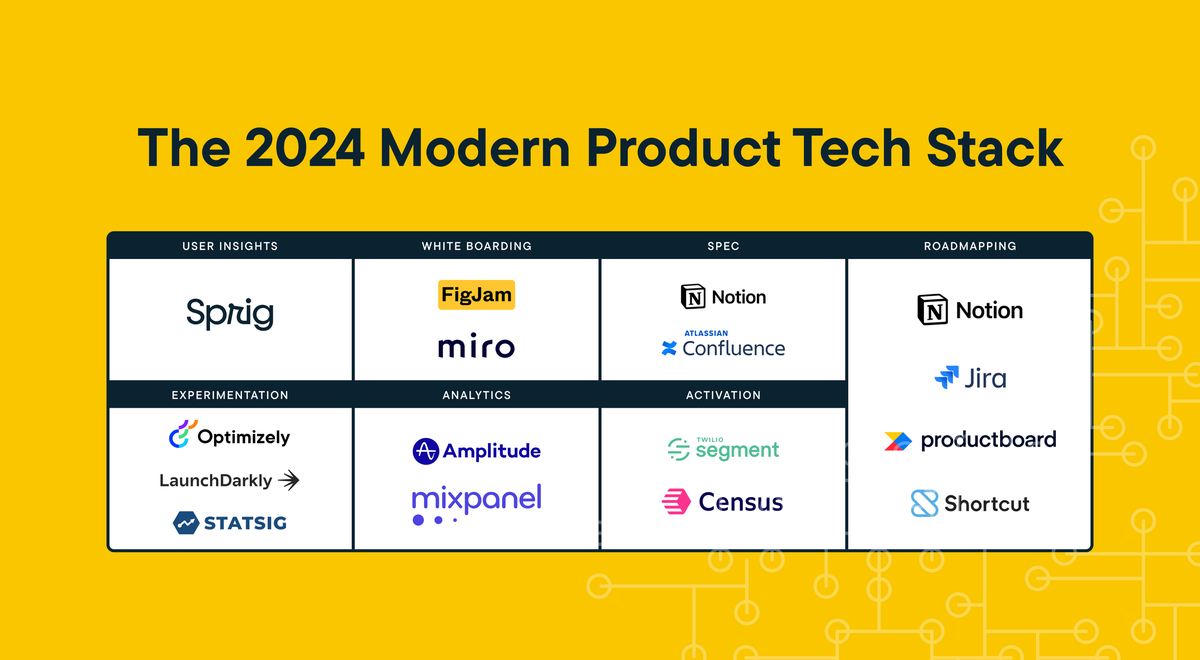
Every few months, a “perfect stack” shows up on Twitter—complete with new acronyms and a promise that your next release will be effortless. It won’t. What actually makes developers faster and keeps production calm is boring consistency: one language everywhere, one runtime that feels good day-to-day, predictable interfaces, and tooling that doesn’t collapse under real traffic. If I were building a new product today, this is the stack I’d start with—and the logic behind it.
TypeScript Everywhere: One Language, Fewer Surprises⌗
If there’s a single foundation I’d refuse to compromise on, it’s TypeScript. Not because “types are cool,” but because they eliminate entire classes of bugs created by uncertainty. Your future self doesn’t just want fewer runtime errors—they want clearer intent.
Where I’d use it:
- Backend services: TypeScript with strict settings
- Frontend: Svelte 5 + TypeScript
- Shared libraries: types, domain models, validation schemas
- Tooling scripts: build, migrations, CI helpers
Opinionated defaults I’d set immediately:
strict: true- Avoid
anylike it’s technical debt with a pulse - Prefer explicit return types for exported functions in shared packages
- Use project references if your repo grows
Concrete example: Suppose you have a “Checkout” flow used by both web and an internal admin tool. With TypeScript, the request/response types can live in a shared @types/checkout package. When the API changes, the compiler becomes your reviewer.
That’s the real win: TypeScript doesn’t just catch mistakes—it shapes how your team talks about code.
Bun as the Runtime: Fast Feedback, Practical Ops⌗
Next up: Bun. I’m not interested in declaring a winner in a runtime war; I’m interested in the developer loop. Bun’s advantage is tangible: fast installs, quick startup, and a toolchain that feels responsive. If you’re shipping frequently, the time saved compounds.
How I’d adopt Bun without being reckless:
- Use Bun for local development and CI build/test steps
- For production, keep deployment predictable (containerize like you always do)
- Pin versions (both runtime and dependencies) to avoid “works on my machine” drift
- Benchmark only if you have evidence of a bottleneck—otherwise, trust the productivity gain
Concrete example: In a monorepo, “install + build + test” can become the slowest part of your day. Bun’s speed makes that loop less painful, which encourages smaller PRs and faster iteration. Smaller PRs lead to fewer regressions. That’s how DX translates into reliability.
I’ll be blunt: if a runtime makes your team’s daily workflow slower, it’s not “simpler.” It’s compounding friction.
Svelte 5 for UI: A UI Framework That Doesn’t Fight You⌗
Svelte has always appealed to me because it’s pragmatic. With Svelte 5, you get a modern component model with a strong focus on performance and developer ergonomics. The best part is that you can build product UIs without turning your app into a configuration labyrinth.
What I’d standardize:
- A design system approach early (even if it’s lightweight)
- Shared UI primitives: buttons, inputs, modals, form components
- Strong typing for props and event payloads
Concrete example: Let’s say you’re building a “user preferences” screen with multiple toggles, validation, and server persistence. With Svelte + TypeScript, you can keep the entire flow coherent:
- Typed form state on the client
- Typed payload for the API call
- Typed response for optimistic UI updates
You end up with fewer “stringly-typed” edge cases, which is where UI bugs hide.
And yes—UI performance matters. But more than that, UI maintainability matters. Svelte’s mental model tends to stay readable as components grow, which is exactly what you want in teams that will change over time.
APIs with Hono or FastAPI: Choose the One You Can Ship With⌗
For APIs, I’d pick between Hono and FastAPI based on team strengths—but I’d insist on a consistent philosophy: fast request handling, clear route structure, and strong validation at boundaries.
If your team leans TypeScript-first: Hono⌗
Hono fits naturally in the “TypeScript everywhere” world. You can keep request/response types aligned with your frontend and shared libraries.
Practical advice: Use schema validation at the edges (request parsing) and keep handlers thin. Put business logic in separate modules so route files don’t become accidental architecture.
If your team wants Python’s ecosystem gravity: FastAPI⌗
FastAPI is excellent when you want rapid development with excellent validation ergonomics, and you plan to lean on Python libraries for specific tasks.
Practical advice: Keep your OpenAPI contract stable and treat it like a public interface. If you version endpoints, do it deliberately—not via accidental behavior changes.
Concrete example (either way): Your API should have typed contracts for:
- Authenticated user identity
- Pagination/filtering semantics
- Error shapes (consistent error codes/messages)
That one decision reduces front-end guesswork and backend churn.
PostgreSQL + pgvector + Redis: Data You Can Trust, Cache You Can Justify⌗
When people talk about “data stacks,” they often list five systems and call it “modern.” I prefer a smaller set of systems you actually understand under pressure.
PostgreSQL as the source of truth⌗
Start with PostgreSQL. It’s the backbone that survives scale, migrations, and reorganizations. Then add pgvector when you need vector search features.
How I’d structure it:
- Use Postgres for all canonical entities
- Store vectors in Postgres via pgvector
- Build retrieval logic so that vector search is an internal detail, not something your app code is tangled with
Concrete example: A support assistant might retrieve relevant articles:
- Store article embeddings in a
documentstable with avectorcolumn - On query, compute the embedding and run similarity search in Postgres
- Retrieve top N matches, then apply application-level ranking/filters
You get one system that supports both relational data and vector similarity, reducing operational sprawl.
Redis for caching (not for persistence)⌗
Use Redis to speed things up—caches, rate limiting, ephemeral session data where appropriate, and background job coordination if it fits your design.
Rule of thumb: If losing the cache would damage correctness, don’t store correctness-critical state in Redis. Store it in Postgres and let Redis be the acceleration layer.
Practical advice: Namespaces and TTLs matter. Add prefixes like cache:user: and set sensible expirations so stale data doesn’t haunt you.
Docker for Deployment + AI Agents in CI/CD: Reliable Shipping, Automated Assistance⌗
Here’s where modern stacks either become disciplined—or become a science project.
Docker for deployment⌗
Docker keeps environments consistent and makes onboarding cheaper. Even if you later move to a more specialized platform, Docker-first habits (clear build steps, reproducible images) pay off.
Practical advice:
- Build optimized images (multi-stage builds)
- Run as non-root
- Keep secrets out of images (use environment variables or your secret manager)
- Add health checks and timeouts so your system fails in a controlled way
AI agents in CI/CD (use them like junior devs)⌗
I’m supportive of AI agents in the pipeline, but only with guardrails. The best use is automation around repetitive tasks: linting improvements, test generation for edge cases, changelog drafting, migration plan review, and code review assistance.
How I’d deploy them safely:
- Limit scope: “Suggest” and “annotate,” not “rewrite everything”
- Require human approval for high-impact changes
- Make them explain their modifications and link to failing logs or test output
- Treat them as workflow accelerators, not sources of truth
Concrete example: If a PR fails integration tests, an agent can read the logs and propose a likely fix: missing environment variable, incorrect request schema, or flaky timing. The agent reduces investigation time; it doesn’t “decide reality.”
Conclusion: A Stack That Optimizes for Shipping, Not Swagger⌗
The 2025 stack I’d choose isn’t the flashiest lineup. It’s the one that respects your time: TypeScript for coherence, Bun for a fast feedback loop, Svelte 5 for maintainable UI, Hono or FastAPI for APIs, PostgreSQL + pgvector for trustworthy data plus retrieval, Redis for speed without correctness risk, Docker for repeatable deployment, and AI agents in CI/CD for automation with supervision.
If you want a stack that survives the hype cycle, optimize for the daily loop that your team lives in—edit, build, test, deploy, repeat. Everything else is noise until it proves it helps you ship.