Bun 1.0 Is Here and Node.js Should Be Nervous
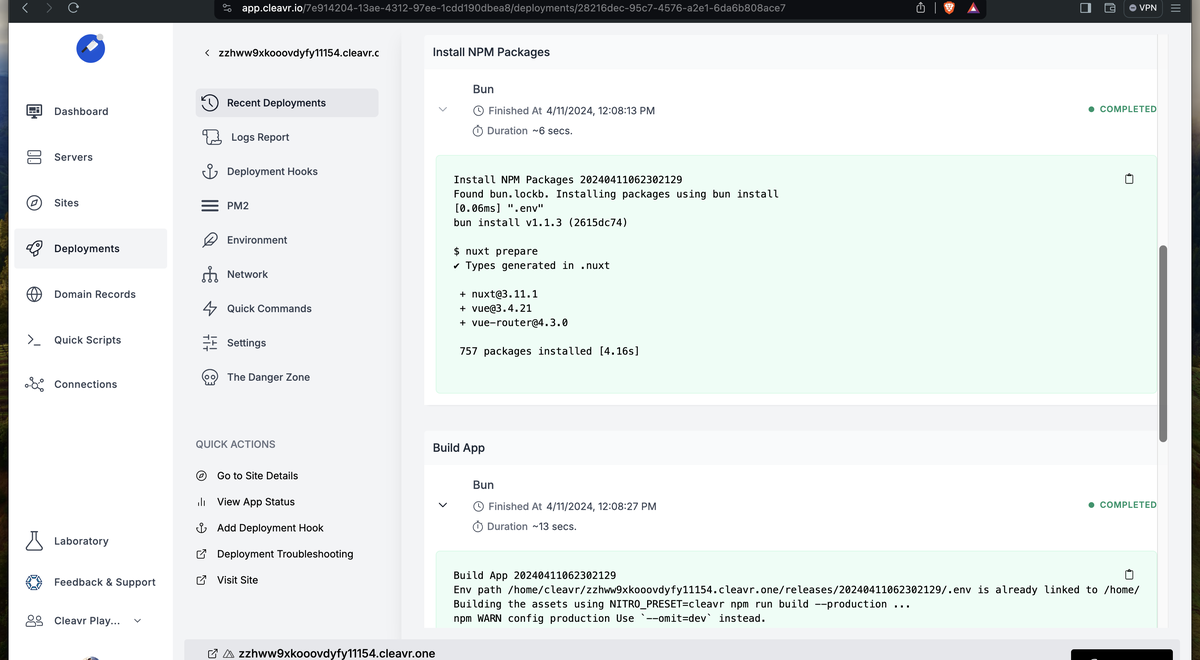
For a long time, Bun lived in the “nice benchmark” corner of the JavaScript universe. Fast startup, impressive throughput, and a promise that someday it would feel like a real platform. Bun 1.0 collapses that gap. It’s no longer just a faster way to run JavaScript—it’s a complete runtime with the tooling you actually need to ship production software. Node.js isn’t dead, but its “default by inertia” advantage just got more fragile.
What Changed With Bun 1.0 (And Why It Matters)⌗
Bun 1.0 isn’t a cosmetic release. The big shift is that Bun now behaves like a complete application platform, not a “run the script” novelty. The runtime comes with its own:
- package manager (so you’re not forced back into npm workflows)
- test runner (so your CI and local developer loop can stay in one place)
- bundler (so you can build, ship, and optimize without bolt-on tooling)
In practice, that means teams can stop treating Bun as a performance experiment and start treating it as a serious choice for new services, CLIs, and even web backends that want to stay lightweight.
This is also where “benchmarks” stop being the whole story. A fast runtime is helpful, but developers buy stability: predictable builds, familiar workflows, and tooling that doesn’t fight you. Bun 1.0 is trying to win on that axis.
The Performance Story Isn’t Just a Gimmick Anymore⌗
Let’s be honest: Node.js has been optimized for years, and it still runs a huge portion of the internet. That’s why performance claims matter only when they translate into real daily wins.
Bun’s headline advantages are still hard to ignore:
- startup times that feel dramatically faster—especially noticeable in dev loops and short-lived serverless-style workloads
- throughput wins on many common server workloads where JavaScript execution and module loading dominate
The practical effect is less “look, numbers” and more “how does this change my workflow?” If your project spins up containers, restarts processes frequently during deployments, or runs many short tasks (think CI jobs, background workers, scheduled scripts), startup speed directly reduces waiting.
Example: imagine a team with a microservice architecture where each service is restarted often during rollouts. If your runtime starts in a fraction of the time, you shorten the feedback loop for deployments and debugging. That compounds into fewer hours lost to “where did it hang this time?” and faster iteration.
Is Bun always faster? No. Performance is workload-specific. But the key point is that Bun 1.0 is designed to be used end-to-end—so you don’t just get a faster “node app start,” you get a faster path from dependencies → tests → bundles → execution.
Node.js Compatibility: “Strong Enough” Becomes a Real Strategy⌗
The other big lever is compatibility. Bun’s npm compatibility story is strong enough that many Node.js projects can switch with minimal changes.
For teams considering migration, this is the most important kind of “works on my machine” that actually matters: fewer rewrites, fewer dependency surprises, fewer weeks lost to edge-case debugging.
A practical migration approach looks like this:
- Start with the app’s dependency graph. In many Node projects, the dependency set is the hardest part. Try swapping the runtime and see whether Bun can install dependencies and resolve imports without chaos.
- Run the test suite immediately. Bun’s test runner helps keep this close to the toolchain. If tests pass, you’ve already cleared the biggest hurdle: behavioral compatibility.
- Build with the bundler. If your project depends on bundling for production artifacts, test that path early. A runtime switch that breaks packaging is not a victory—it’s just a delay.
- Fix the handful of friction points. Expect some ecosystem edges: subtle differences in how specific Node APIs behave, or assumptions made by certain libraries. The difference now is that Bun gives you enough tooling to iterate quickly.
Opinionated take: if your project is greenfield, you shouldn’t wait for a hypothetical perfect compatibility story. If you already have a mature Node codebase, don’t romanticize migration either—trial Bun in a branch, run tests, and measure end-to-end build/run time. The “minimal changes” promise is only real when validated against your dependencies and your deployment shape.
Tooling Is the Battleground Now: Package, Test, Bundle⌗
Node.js has enjoyed a decade of “best-of-breed” tooling, and that ecosystem is real. But Bun’s bet is that you shouldn’t have to stitch together four or five tools just to ship a modern application.
Bun 1.0 gives you a cohesive toolchain:
- Package management that’s designed to work naturally with the runtime.
- A test runner that fits into the developer workflow.
- A bundler that supports production packaging without forcing you to build around a separate stack.
Here’s how this shows up for day-to-day development.
Example: a lightweight web service project⌗
A typical team wants:
installto be fast and predictabletestto run quickly locally and reliably in CIbuildto generate output that deploys cleanly
With Bun 1.0, you can keep those steps inside one “Bun-native” workflow. That reduces context switching: fewer config formats, fewer script adapters, fewer “why does this work with Webpack but not with our custom setup?” moments.
And because the runtime is tied to the tooling, you’re less likely to hit performance mismatches where your bundler is fast but your runtime cold-start is slow, or where your install is quick but your test harness lags behind.
When Bun Is the Right Choice (and When It Isn’t)⌗
Bun’s momentum is not just about speed—it’s about the cost of adoption. The more your project values fast feedback and simple toolchains, the more Bun makes sense.
Bun is a strong fit if…⌗
- You’re building greenfield services or tooling and you want a modern, cohesive dev workflow.
- You run workloads that benefit from startup speed (many short-lived processes, dev servers, CI tasks, serverless-style execution).
- You want to standardize on a single runtime and toolchain to reduce friction.
Node.js is still the safer default if…⌗
- You have a highly specialized dependency stack that you can’t comfortably validate in time.
- Your team has deep investment in Node-only tooling and you’re not ready to revisit build/test pipelines.
- You rely on edge-case behavior from Node APIs where library support may lag.
Here’s the sharper truth: Node isn’t going anywhere soon. Even if Bun becomes the better choice for new projects, Node will remain the compatibility baseline for enterprise systems, long-lived apps, and libraries that assume Node semantics.
But for greenfield projects, the “default to Node forever” posture should be questioned. Monthly, the case for choosing Bun gets easier: the tooling is already there, the ecosystem compatibility is strong enough to start, and the performance advantages translate into real workflow improvements.
A Migration Playbook That Doesn’t Waste Time⌗
If you’re on Node and wondering whether to try Bun, treat it like a controlled experiment—not a rewrite.
- Clone the repo and switch runtime in a feature branch.
- Run
installand confirm dependencies resolve. - Run unit tests and integration tests. Fix the smallest set of issues first.
- Run your build pipeline and verify that production artifacts behave correctly.
- Compare cold-start and CI timing. Don’t just benchmark “node vs bun” in isolation—measure your actual pipeline steps: install → test → build → run.
If your project has a CI pipeline, make it the truth serum. It’s the most repeatable environment you’ll have, and it reveals whether Bun’s toolchain is truly frictionless under pressure.
And keep one pragmatic rule: don’t migrate everything at once. Start with one service, one repo, or one subset of jobs. If Bun is going to improve your day-to-day, you’ll see it quickly—without risking the whole organization.
Conclusion: Node Should Stay Confident—But It Shouldn’t Stay Complacent⌗
Bun 1.0 changes the conversation. The runtime isn’t “just benchmarks” anymore; it’s a complete toolkit with package management, testing, and bundling built in. The performance story remains compelling, and—crucially—it’s now wrapped in workflows that feel production-ready.
Node.js will keep its place in the ecosystem for a long time. But for greenfield projects, the default choice is no longer automatic. Bun has narrowed the gap between “fast on my laptop” and “works as a platform,” and that’s exactly what makes teams pay attention.
If you’re building new systems in the next quarter, you should at least evaluate Bun—because the longer you wait, the more likely you are to feel left behind by teams that already made the switch.