Edge Functions Are the Serverless Evolution Nobody Talks About
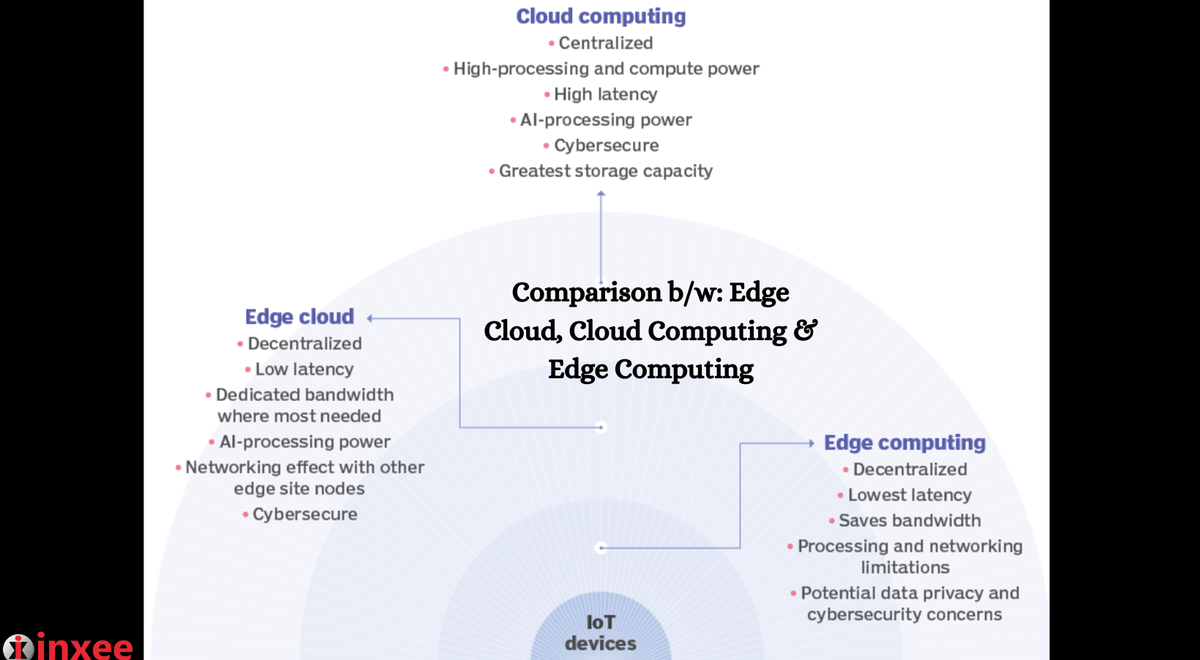
Serverless used to mean “write code, forget servers.” But for many teams, it also meant “accept latency tax.” The breakthrough isn’t just that serverless got cheaper or easier—it’s that edge functions moved compute closer to users, turning network delay from an inevitability into a choice. Cloudflare Workers and Deno Deploy didn’t merely improve performance; they quietly rewired how modern deployment strategy should work.
Why Lambda Feels Fast—Until It Doesn’t⌗
AWS Lambda (and its cousins) changed application development by making compute elastic. You pay for what you run, you deploy code, and the platform handles scaling. For workloads that aren’t latency-sensitive, Lambda can be a great fit.
But there’s a structural issue Lambda can’t fully erase: regionality. Even when your function is “serverless,” it still runs in a specific cloud region. If your user is halfway across the world, every request has to traverse distance, routing, and congestion before your code even starts. In other words, Lambda optimizes your server management—but not always the physics of delivery.
Teams often compensate by optimizing backends: caching, query tuning, faster language runtimes, aggressive CDNs, and better keep-alive behavior. Those improvements can be real. Yet for APIs and request-driven logic, the dominant cost often becomes the round trip to the nearest compute region—not the database query itself.
Edge functions attack that different problem directly: they run your code near the network edge, in many locations simultaneously.
Edge Functions: Same “Serverless,” Different Placement⌗
Edge functions are still serverless in spirit: deploy code without managing servers. The key difference is where that code runs. Instead of a single regional deployment target, edge platforms execute your logic at a large number of points of presence worldwide.
That placement matters because latency is often dominated by distance. Move compute closer to users and you shrink the time between “user pressed a button” and “your logic replied.” This is why edge approaches feel different: a cached static asset might already be served from the edge, but dynamic logic—auth, request shaping, personalization, transformations—has historically been trapped behind regional compute.
Cloudflare Workers, for example, run on V8 isolates rather than containerized environments. That architectural choice is less about branding and more about behavior: startup time and request overhead are dramatically reduced compared to traditional cold-start patterns. In plain terms, “spin up” becomes almost a non-event, which is what you want for high fan-out request handling.
Practical framing: if your workload involves lots of small requests that must respond quickly, edge functions can remove a whole category of latency. If your workload is a heavyweight batch job, it won’t.
The Real Trade-off: Constraints That Force Better Design⌗
Edge isn’t “unlimited serverless.” It’s serverless with guardrails—meaning you have less flexibility than with Lambda or a container service.
Common constraints you’ll feel immediately include:
- No filesystem access (or severe limitations): You can’t assume persistent disk semantics.
- Limited memory: You can’t casually load large models, huge datasets, or heavy in-memory processing.
- No long-running processes: You can’t run background daemons the way you might in a VM or container.
- Runtime differences: “Works in Node locally” doesn’t always translate perfectly to the edge runtime.
This is not a deal-breaker; it’s a forcing function. Edge functions are best when the request can be handled quickly and deterministically—when you can treat each request like a self-contained transaction.
That suggests a different architecture mindset:
- Keep transformations lightweight.
- Stream responses where possible.
- Use external services for heavy lifting.
- Cache results aggressively when safe.
- Design for timeouts and early exits.
If you’ve ever built an API and then tried to shoehorn authentication, rate limiting, header normalization, and content rewrites into multiple backend layers, edge functions let you pull some of that work closer to the user—without waiting for a full regional compute pipeline.
Where Edge Functions Shine (With Concrete Examples)⌗
Edge functions are not a replacement for everything. They’re an amplifier for specific classes of problems: request-driven logic that benefits from geographic proximity and fast startup.
1) Authentication and Authorization Middleware at the Edge⌗
Instead of sending every request to a backend just to validate a token, you can verify credentials at the edge and forward only authorized traffic.
A common pattern: inspect the Authorization header, validate a JWT signature (or consult an auth endpoint if needed), and then add identity context to upstream requests. Even if you still call a backend for business logic, you’ve removed a round trip and reduced load on your origin.
Practical advice: keep verification fast. If token validation requires remote calls, cache those results or use a strategy that keeps your edge response time predictable.
2) Request Routing and URL Rewriting⌗
For multi-tenant apps, edge logic can map hostnames or paths to the right origin service.
Example: tenantA.yourapp.com and tenantB.yourapp.com can route to different backends, while still serving shared assets from the same CDN. Or you can implement clean URLs that rewrite to internal endpoints without changing the user-facing structure.
The payoff is real: fewer redirect hops and less backend logic.
3) Content Transformation (But Keep It Bounded)⌗
Want to transform HTML responses, rewrite links, or apply small response mutations? Edge is ideal.
Examples:
- Rewrite image URLs to a CDN format.
- Adjust caching headers based on path patterns.
- Inject environment-specific scripts into the response.
- Transform JSON payloads for compatibility between services.
The key is to keep transformations small and streaming-friendly. If you need to render a full page from templates, that may be a better fit for edge rendering frameworks—still edge-adjacent, but architected for it.
4) Security Controls and Bot Mitigation⌗
Edge is naturally suited for request filtering:
- Block known malicious patterns.
- Rate limit by IP or token.
- Enforce header requirements.
- Normalize requests to reduce attack surface.
You get two advantages: quicker rejection (less wasted work upstream) and consistent enforcement across locations.
5) Personalized Responses with Near-Zero Startup⌗
If your personalization is lightweight—say, selecting a theme or variant based on a cookie—you can compute that at the edge and return the correct result immediately.
Done well, personalization becomes a fast lookup rather than an expensive orchestration step across regions.
A Practical Migration Strategy: Don’t “Edge Everything”⌗
The best way to adopt edge functions is to target the latency contributors first, not to rewrite your entire stack.
Here’s a sensible approach:
- Measure before you guess. Look at your request waterfall: where does time go? If you see meaningful delay before your backend code starts running, that’s your signal.
- Start with one endpoint class. Pick a narrow slice like auth validation, header normalization, or URL rewriting.
- Design for statelessness. Assume each request is independent. If you need data, fetch it efficiently (or cache it).
- Choose safe caching. If the edge response can be cached without violating user isolation, do it. If not, cache the pieces that are safe (like token verification artifacts or configuration).
- Integrate with your existing infrastructure. You don’t have to replace your backend. Let edge handle the first mile, then forward the request.
A common pitfall is using edge functions as a dumping ground for complex business logic. That defeats the point: you’ll end up fighting constraints, complicating debugging, and still paying upstream latency for the work that stays in the origin.
Instead, treat edge code like the “front porch” of your system: fast checks, quick rewrites, and small transformations that make everything downstream cheaper.
The Bigger Point: Deployment Strategy Is Now Part of Performance⌗
There’s a deeper reason people “don’t talk about” edge functions enough: they change the conversation from implementation details to deployment geography.
You can’t optimize your way out of regional distance alone. You can add caching and tune code, but if the request must wait for regional compute before it can even decide what to do, your platform is still paying the network tax. Edge functions turn that decision into an immediate action near the user.
Cloudflare Workers and Deno Deploy represent a shift in what developers should consider normal: not just “deploy code,” but “deploy logic at the network edge.” The runtime constraints are real, yet they align with modern web needs—short-lived request handling, streaming responses, middleware-like workflows, and fast security enforcement.
Conclusion: Edge Functions Are the Upgrade You Actually Feel⌗
Serverless was supposed to remove friction. Edge functions remove another form of friction: the latency that comes from waiting for code to run far away. When your workloads match the edge sweet spot—API middleware, auth, routing, security filters, bounded transformations—Workers-style execution can make your system feel dramatically faster, not just better optimized.
Adopt edge functions like a product decision: start with one high-impact path, design for statelessness and speed, and let the edge handle the first and most time-critical moments of the request lifecycle.