GitHub Actions Ate Jenkins and Nobody Mourned
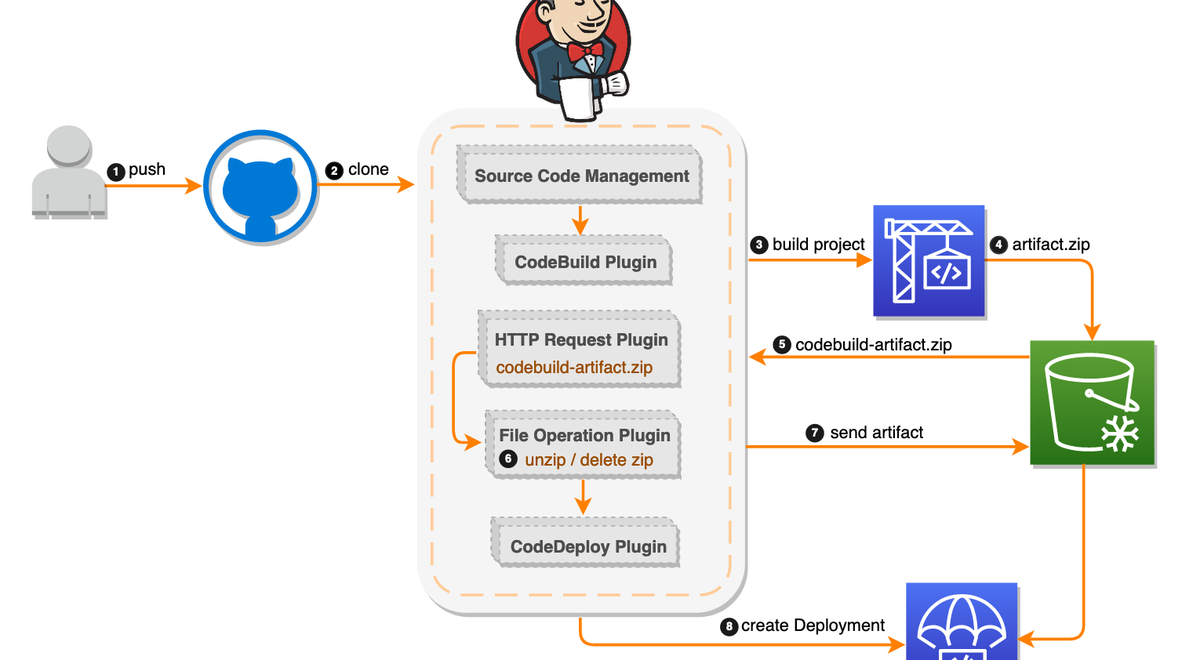
For years, CI/CD felt like a rite of passage: set up Jenkins, wrestle with plugins, babysit servers, and pretend the build pipeline was “just another application.” Then GitHub Actions arrived with a simple pitch—commit a workflow, and stop treating automation like a pet. The punchline isn’t that Jenkins stopped working. It’s that the reasons people used Jenkins became optional overnight.
The Jenkins Era: Great Tools, Heavy Maintenance⌗
Jenkins didn’t earn its reputation by accident. It was flexible, battle-tested, and extensible in a way that made teams feel in control. If you needed a custom build step, a weird environment, or an opinionated deployment flow, you could usually duct-tape it into Jenkins and keep shipping.
But Jenkins has a cost structure that most developers quietly hate:
- You own the platform. Patching Jenkins, upgrading Java, securing the controller, managing plugins, cleaning up agents—it’s not “set and forget.” It’s ongoing ops.
- Plugins are a supply chain. Every plugin is another moving part. Some stay healthy; others accumulate warnings, break with upgrades, or become incompatible with the rest of your setup.
- The pipeline becomes a second system to administer. Even when the Jenkinsfile is clean, someone still has to explain why builds fail “only sometimes,” why a node is stuck, or why an agent label doesn’t match.
The uncomfortable reality: Jenkins made CI/CD a job. It wasn’t just a workflow—it was an internal product you maintained. That’s a tax even mature teams resent, and a deal-breaker for smaller ones.
What Changed: CI/CD Became Source-Driven Again⌗
GitHub Actions flipped the mental model. Instead of “run your own CI server,” it became “describe your automation in your repo.”
A workflow is just YAML living beside your code. That shift sounds small, but it changes everything:
- Review is native. When you modify how you build or test, your PR shows exactly what changed. No separate change process. No “trust the pipeline maintainers.”
- Version control becomes the system of record. Roll back a broken pipeline by reverting a commit. That’s the most underrated feature of the GitHub Actions approach.
- Discovery is easier. You don’t have to remember plugin names or hunt down internal docs written by someone who left the company. You search the repository, and the workflow is right there.
Consider a typical improvement scenario. Teams often start with “we’ll automate builds” and end up with a pipeline that nobody touches because it’s fragile. With GitHub Actions, the barrier drops: developers can iterate without filing infrastructure tickets.
And yes—YAML can be intimidating. But “intimidating” is a one-time problem. “Nobody wants to babysit Jenkins” is a continuous one.
Marketplace Actions and Matrix Builds: The Death of DIY CI⌗
A big reason Jenkins survived so long is that teams built everything themselves—or stitched together a plugin ecosystem. That approach worked, but it also encouraged bespoke solutions for common tasks: checking out code, setting up language runtimes, caching dependencies, building containers, publishing artifacts.
GitHub Actions made the default path dramatically easier by combining two ideas:
- Reusable actions for common tasks
- Matrix builds for systematic coverage (multiple versions, OSes, or configurations)
Instead of inventing your own “install dependencies” step or writing custom scripts to manage caching, you can use established actions and keep your workflow focused on the logic that’s unique to your application.
For example, testing a Node.js project across Node 18 and 20 doesn’t have to be a tangle of branches and cron jobs. A matrix turns it into something readable:
- Define the versions once
- Let the runner handle the repetition
- Keep failures scoped to the specific environment
That’s the difference between CI/CD as a craft and CI/CD as a capability.
And it matters culturally: the more your pipeline resembles declarative intent, the more developers feel ownership instead of fear.
Self-Hosted Runners: Enterprise Requirements Without the Jenkins Burden⌗
At some point, someone will say: “Sure, hosted runners are nice, but we need enterprise controls.” That’s fair. Some environments require access to private networks, internal artifact registries, compliance constraints, or custom tooling that can’t run on shared infrastructure.
The good news is that you don’t have to rebuild the Jenkins world to meet those needs.
GitHub Actions supports self-hosted runners, which let you keep your requirements while removing the “Jenkins maintenance job” from your daily life. In practical terms, you can:
- Install runners inside your network boundary
- Use labels to target where jobs can run
- Keep the workflow definition in the repo (so the orchestration is still source-driven)
- Scale runners as needed without managing a CI “controller” application
This is where the comparison gets brutal. With Jenkins, “self-hosted” typically means you’re also hosting the orchestration layer—maintaining controllers, plugin compatibility, job configuration, and operational drift. With GitHub Actions, you can host only what must be hosted: the execution environment.
You end up with enterprise capability without turning your CI/CD platform into a permanent internal engineering program.
The Real Question: Is Anyone Happy Running Jenkins?⌗
Here’s the uncomfortable editorial stance: if your team still runs Jenkins, ask yourself whether Jenkins is solving a problem you genuinely have—not whether you can keep it running.
A healthy CI/CD setup has one key property: it feels boring. Builds run, tests execute, artifacts publish, deployments follow policy. When something breaks, the failure is actionable.
Jenkins often creates the opposite experience:
- Builds fail because of infrastructure conditions, not code changes.
- Pipeline behavior is hard to reason about because it’s spread across plugins, scripts, and server state.
- Improvements require knowledge that only a few people have.
If the only people who can safely modify the pipeline are “the Jenkins team,” then Jenkins has already achieved the worst possible outcome: CI/CD has become a specialty skill. That defeats the whole purpose of automation.
And nobody wants to maintain a tool that makes everyday development feel harder. If your CI/CD pipeline requires a dedicated team to keep it alive, your platform isn’t supporting developers—it’s consuming them.
Migration doesn’t need to be dramatic. Start by moving one workflow: say, “run unit tests on pull requests.” Port the logic, keep the build steps, and compare runtime and developer experience. Over time, you’ll find that replacing orchestration is less work than you feared—and less risky than you expect, precisely because workflows are versioned alongside the code.
A Practical Path Off Jenkins (Without Big-Bang Rewrite)⌗
Nobody should pretend migrations are effortless. But you can make the transition systematic and low drama. A good migration plan focuses on outcomes, not ideology.
Inventory your pipeline responsibilities
List what Jenkins does today: build, test, lint, package, publish artifacts, deploy environments, run scheduled jobs, manage credentials.Pick a narrow first workflow
Choose something with clear inputs/outputs—like “compile + unit test” on every PR. Avoid the most custom deployment logic until you’ve established confidence.Model stages as jobs and keep steps explicit
Treat your workflow like production code: readable naming, small steps, clear failure points. If you need scripts, check them into the repo.Use caching and artifacts intentionally
Dependency caching and artifact passing are where pipeline speed and reliability improve. Do not reinvent caching mechanisms if a ready approach exists; do ensure caches are keyed sensibly.Move secrets and permissions carefully
Jenkins credential management and GitHub Actions secrets are different. Plan the migration of tokens, registry credentials, and deployment keys. Least privilege matters.Adopt self-hosted runners only when you must
Start on GitHub-hosted runners if possible. Bring in self-hosted runners when you hit real constraints (network access, internal tooling, compliance).
The goal isn’t to “win” a tool choice. The goal is to make CI/CD so maintainable that developers don’t notice it—except when it speeds them up.
Conclusion: CI/CD Shouldn’t Be a Separate Engineering Department⌗
Jenkins was a landmark product, and it earned a decade of loyalty. But modern CI/CD doesn’t need a dedicated maintenance team. GitHub Actions made automation source-driven, composable, and easier to reason about—while self-hosted runners cover legitimate enterprise needs without reintroducing the Jenkins maintenance tax.
If your Jenkins setup requires constant babysitting, you don’t have CI/CD—you have a second system to operate. And if nobody’s happy about that, it’s time to stop pretending it’s normal.