The Observability Stack Is Consolidating and That’s Good
For years, observability felt like a series of one-off experiments: pick a backend, instrument your app, pray it works with your dashboards, and then repeat when the next platform “wins.” That era is ending. OpenTelemetry has emerged as the common language, and the ecosystem is converging around it—making observability less of a vendor-specific art project and more of an engineering discipline.
From “observability wars” to “shared instrumentation”⌗
The observability ecosystem didn’t just grow—it fragmented. StatsD fought for metrics, Prometheus won a generation of monitoring fans, while Jaeger and Zipkin splashed the trace landscape with competing ideas. Even when two tools were both “good,” they often required different instrumentation strategies, different exporters, different semantics, and different operational habits.
The practical downside was predictable: instrumentation became backend-driven rather than application-driven. If you started with one stack and later wanted to switch, you weren’t just changing dashboards—you were rethinking how your software reported telemetry.
Consolidation fixes this. The core shift is that instrumentation is now largely backend-agnostic. Your application emits telemetry in a standard format, and the backend decides what to store, how to index, and how to visualize it. That means less rewriting when strategies change—and faster adoption of new analysis techniques without re-instrumenting your systems.
OpenTelemetry won because it standardized the “wire” and the “SDK”⌗
OpenTelemetry is more than a marketing umbrella. It standardized two things that matter to real teams:
- A common telemetry model (what spans, metrics, and logs represent, and how they relate).
- A common protocol and SDK approach for emitting that data.
The impact shows up immediately in everyday developer workflows. Consider a typical microservice deployment:
- You add tracing to a service.
- You add metrics to track latency and errors.
- You correlate those signals during incidents.
With a consolidated approach, you can instrument once, and you can route the output to different destinations. Today you might send traces to Tempo and metrics to Prometheus-compatible storage. Tomorrow you might add a vendor backend for enterprise workflows—or run a mixed environment during migration.
The key is separation of concerns: your application speaks OpenTelemetry; your platforms listen. That’s the difference between “observability as a product decision” and “observability as an engineering capability.”
The backend landscape is converging—Grafana, Datadog, and more⌗
Once OpenTelemetry became the shared foundation, the competition didn’t disappear—it evolved. Backends now differentiate on storage, scale, UI/UX, alerting ergonomics, cost, and operational maturity—not on whether your instrumentation can even work.
Grafana’s LGTM stack is a credible open-source alternative⌗
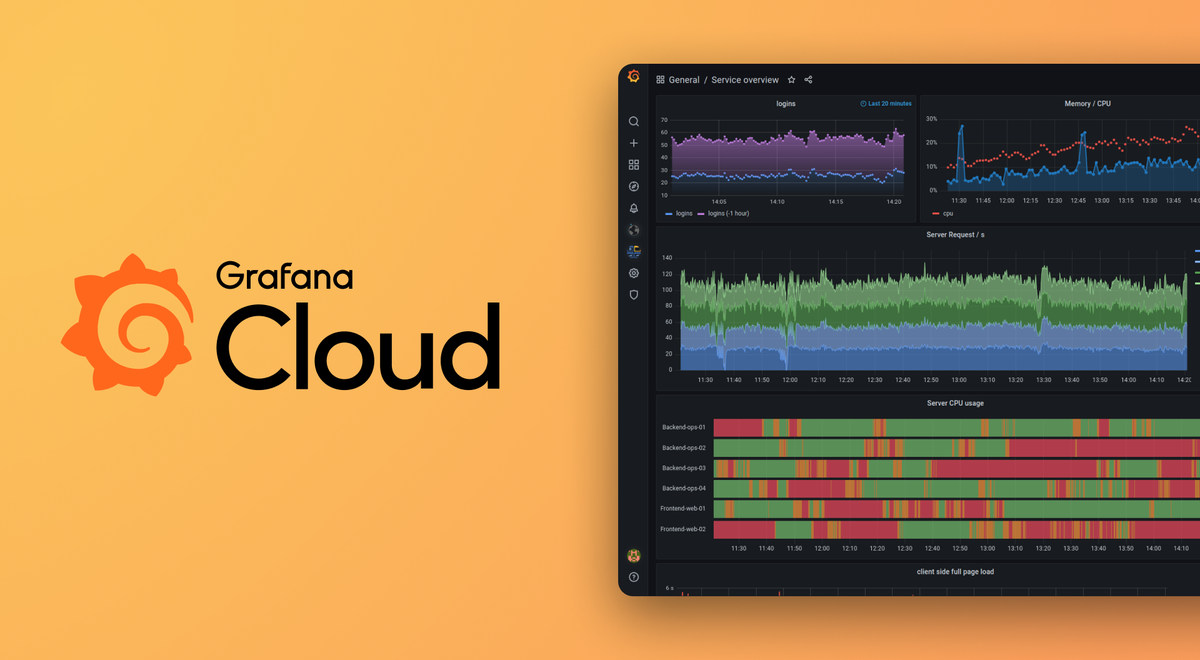
Grafana’s “LGTM” story—Loki (logs), Grafana (dashboards), Tempo (traces), and Mimir (metrics)—is compelling because it treats the observability surface as a cohesive platform. The result is a workflow many teams actually want:
- Search logs in Loki while looking at traces in Tempo
- Use Grafana panels to correlate metrics and traces
- Maintain one query and visualization layer across signals
Where this matters in practice is during incidents. Suppose a customer reports elevated checkout failures. A useful workflow looks like:
- Use Grafana to see the error rate spike (metrics).
- Jump to a trace exemplifying a failing request (traces).
- Inspect the relevant log lines and upstream/downstream calls (logs).
When these signals are tied together consistently, investigation time collapses. You spend less time stitching together evidence and more time fixing root causes.
And because LGTM is largely open-source, teams can keep the cost structure sane. You can run it yourself, scale it deliberately, and avoid paying for features you don’t need. (That doesn’t automatically mean “cheaper in every case,” but it does mean you have options that aren’t locked behind contracts.)
Datadog still wins on speed-to-value⌗
Datadog’s strength has long been operational convenience: getting to dashboards and alerting quickly, and handling ingestion, indexing, and analysis in a polished way. If you want a turnkey “ship it tomorrow” experience, vendor ecosystems still have an edge.
But consolidation changes the negotiation. If you start with Datadog but later decide you need more control—or you want to reduce recurring cost—you’re not trapped by instrumentation lock-in in the same way. OpenTelemetry reduces the pain of switching backends because your application doesn’t have to be rewritten to emit different telemetry formats.
The real takeaway: compatibility is now a default expectation⌗
The emerging norm is that observability tools should accept OpenTelemetry-compatible data. That doesn’t mean they’re identical—storage and semantics still differ—but it means compatibility is no longer a special project.
For engineering leaders, this is the shift worth caring about. It turns observability procurement from a gamble into a managed lifecycle.
Practical migration strategies: how to avoid the “rewrite everything” trap⌗
Even with consolidation, most organizations aren’t starting from greenfield. They have:
- existing tracing systems
- Prometheus metrics scraped today
- log pipelines built around specific agents
- dashboards that encode institutional knowledge
So the goal isn’t “rip and replace.” It’s staged convergence.
Step 1: Instrument once, then fan out⌗
If you already collect telemetry with partial standards, move toward OpenTelemetry at the edges. A practical pattern is:
- Keep existing backends running.
- Begin exporting via OpenTelemetry.
- Validate that correlation works: trace IDs link to logs, metrics align with span events, and service naming is consistent.
Make this measurable. For example, pick one critical user journey—like “search to checkout”—and ensure you can follow it end-to-end using the new pipeline without guessing.
Step 2: Standardize service names and attributes early⌗
Convergence fails when teams invent inconsistent conventions. Decide what you mean by:
- service name
- environment (prod/staging)
- deployment version
- instance identifiers
- request/user correlation keys (when appropriate)
OpenTelemetry gives you the structure; humans still define the meaning. Invest time here early, because it determines how usable your observability data becomes in Grafana or any UI.
Step 3: Use one “source of truth” for each signal during migration⌗
Mixing duplicate pipelines is tempting—especially when you can’t turn everything off at once. But duplication can create confusing dashboards and noisy alerts.
A cleaner approach is to pick a default destination per signal while migrating:
- traces: Tempo (new)
- metrics: Mimir or existing Prometheus (choose deliberately)
- logs: Loki or existing log store
Then sunset old pipelines after validation.
Step 4: Treat cost and retention as first-class design inputs⌗
When observability becomes consolidated, the temptation is to collect everything. Don’t. Define your retention and downsampling strategy for each signal:
- Keep high-cardinality data short-lived.
- Store detailed logs for a limited window.
- Keep tracing sampling tuned to your budget and incident needs.
Because now you’re able to route the same telemetry to different backends, you can also right-size storage decisions without forcing new instrumentation.
What this means for teams: less lock-in, more engineering focus⌗
The most important benefit of consolidation isn’t the choice of vendor or open-source stack. It’s what consolidation frees your organization to do.
You can plan for change instead of fearing it⌗
When instrumentation is standard, switching backends becomes an infrastructure migration, not a feature rewrite. That changes the tone of platform roadmaps. Instead of treating observability selection as a one-time irreversible bet, teams can evolve their stack based on cost, performance, and usability.
Incident response becomes faster and more consistent⌗
Correlation is where observability earns its keep. With standardized telemetry, trace IDs can reliably connect to logs and span context can consistently enrich metrics and dashboards. The result is less time spent on plumbing and more time on diagnosis.
Developers get a smoother path from “instrumented” to “understood”⌗
A subtle but real advantage: once telemetry meaning is consistent, tools can provide better defaults—service maps, better drill-down experiences, clearer dashboards, and more useful alerts. That makes observability not just something ops manages, but something developers can use to iterate confidently.
Conclusion: the observability stack is becoming a utility⌗
The observability wars weren’t meaningless—they drove innovation. But the fragmentation was expensive, and the ecosystem is now correcting course. OpenTelemetry unified instrumentation and wire protocol, and that shared foundation is enabling real interoperability across backends.
Whether you choose Grafana’s LGTM approach, a vendor platform like Datadog, or a hybrid strategy, the trend is clear: observability is consolidating into a utility-like capability. For teams, that means fewer rewrites, less lock-in, and faster paths from signals to fixes. That’s not just good architecture—it’s good business.