Why PostgreSQL’s Community Is Its Biggest Competitive Advantage
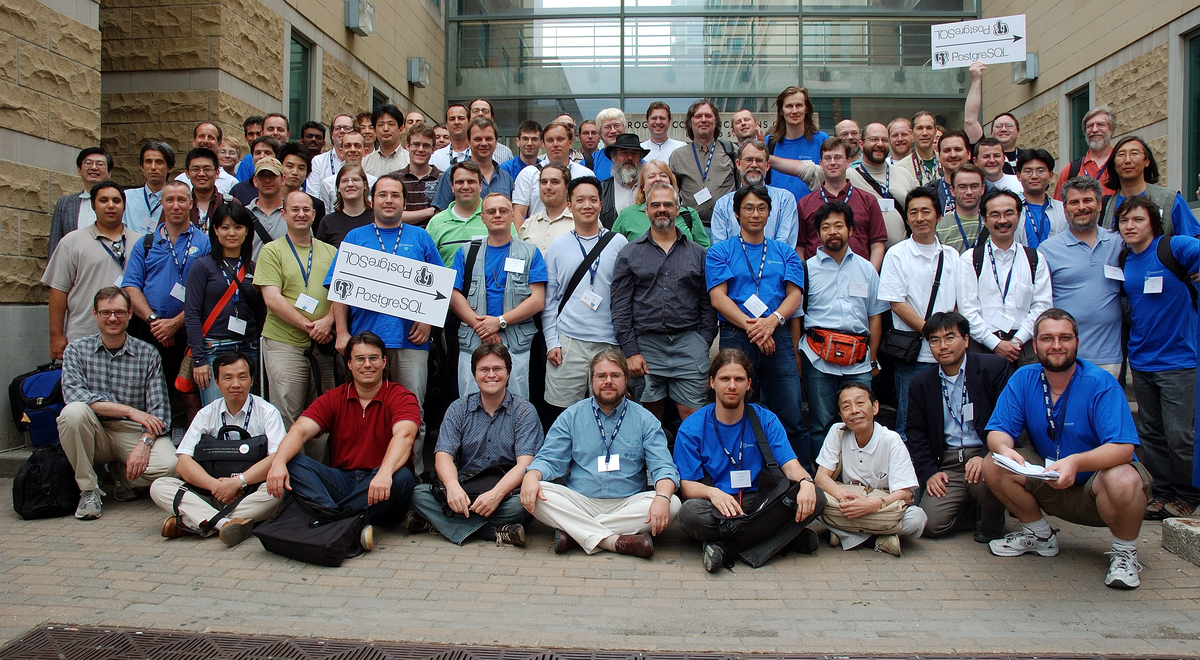
Most databases try to win on features—better indexing, faster joins, nicer tooling. PostgreSQL wins on something harder to copy: a community that turns upgrades into ecosystems. Extensions expand Postgres without bloating the core. Conferences spread hard-won lessons faster than any marketing cycle. And a contributor culture that’s distributed across companies—not owned by one—keeps the project resilient.
If you’ve ever felt that proprietary platforms grow “only when the vendor wants,” PostgreSQL’s community model will feel like a breath of fresh air. Here’s why that matters, and how to think about it when choosing a database strategy.
The real moat isn’t core—it’s the extension ecosystem⌗
It’s easy to look at PostgreSQL feature checklists and conclude “other databases can do that too.” The more interesting question is: How does the system evolve without turning into a kitchen sink?
PostgreSQL’s extension model is the answer. Extensions let the database grow capabilities as opt-in add-ons, usually in separate packages with clear boundaries. You can adopt what you need without dragging the entire world into a monolith of features.
Think about workflows that typically belong outside the database core:
- Auth and identity integration: You can add what you need—without forcing every installation to carry the same assumptions.
- Custom indexing strategies: When a team needs something specific (for example, a new way to index a domain type), extension authors can build it without waiting for a global release cycle.
- Specialized data features: Geospatial, time-series helpers, vector tooling, and operational utilities often arrive through extensions and community libraries rather than kernel-level rewrites.
Practically, this changes how you plan upgrades. In many proprietary ecosystems, “new capability” often means “new licensed version,” sometimes with migration pain. With PostgreSQL, new capability frequently means “install an extension” and move on. Your roadmap becomes modular.
And that modularity compounds. Once an extension has users, it tends to attract maintenance contributors, bug fixes, performance tuning, documentation, and integration work. The ecosystem doesn’t just add features—it improves them in the open.
Community contributions beat vendor roadmaps⌗
Proprietary databases operate on a simple premise: the vendor decides what matters, when it ships, and how it’s supported. That’s not inherently bad—but it does create a predictable dynamic: innovation tends to lag behind community experimentation because the experimental work has to pass through a gatekeeper.
PostgreSQL’s model is fundamentally different. It treats contributions as a first-class development pipeline. That means:
- Ideas originate everywhere: from startups, from enterprise teams, from researchers, from individuals who simply care.
- The best solutions have to earn their place: they go through review, testing, and iteration.
- The project can absorb innovation without adopting everyone’s worldview: extensions help keep the core clean while still enabling growth.
The key is not that PostgreSQL is “more innovative than any vendor.” It’s that the incentives are aligned with long-term improvement. When contributors upstream changes, the benefits aren’t trapped behind a product SKU. They become part of the common foundation.
That’s the competitive difference. Features are easy to clone. A living contribution culture is not.
Conferences create a knowledge network, not just hype⌗
Software communities don’t scale with Git commits alone. They scale with shared context—what works, what breaks, and what’s actually maintainable in production.
This is where PostgreSQL conferences matter. PGConf events across regions do more than entertain. They turn practical experience into reusable patterns. You get sessions on extension design, replication trade-offs, performance investigations, migrations, and operational playbooks—not just “look at our demo.”
Here’s what that means for teams making real decisions:
- Architectural clarity: You hear how people structure workloads, partitioning strategies, and indexing approaches under constraints similar to yours.
- Faster troubleshooting: When a bug or behavior shows up, there’s often precedent in community discussions.
- Better integration instincts: You learn where extension boundaries make sense and where they don’t.
The strongest conferences share one trait: they reward depth. They aren’t only about features; they’re about how to make those features reliable. That operational knowledge is what many teams struggle to acquire quickly—especially when they’re trying to build on a database that isn’t “their team’s database,” but rather a dependency they can’t afford to misunderstand.
Distributed companies, shared ownership⌗
One of the most underappreciated advantages of PostgreSQL is that no single company controls the project. That doesn’t mean there’s no corporate involvement—it means corporate involvement is accountable to the project and the community, not to a private roadmap.
This distributed ownership shows up in the services ecosystem:
- Neon focuses on Postgres-based cloud offerings with modern scaling approaches.
- Supabase builds developer-centric platforms on top of Postgres for application teams.
- Crunchy Data supports production-grade deployments, operational tooling, and lifecycle management.
- Tembo offers managed capabilities around Postgres and extensions, helping teams move faster without giving up the flexibility of the underlying database.
These companies compete in the market, but many also contribute upstream—whether that’s improving extensions, sharing integration learnings, or helping stabilize the ecosystem.
The practical consequence is trust. When your database is backed by a community where multiple organizations have skin in the game, your risk profile changes. You’re less likely to face sudden product pivots, deprecations without meaningful alternatives, or “platform lock-in” that’s really just a business decision.
In other words: community isn’t only a technical advantage. It’s a governance advantage.
Sustainable open source looks like a feedback loop⌗
A lot of open source projects begin as code and end as abandoned repositories. PostgreSQL is different because it has a feedback loop:
- People use Postgres in real systems.
- They build extensions, tools, and integrations to solve practical problems.
- Those solutions accumulate users.
- Community maintainers and contributors refine and upstream the best ideas.
- The improved ecosystem enables broader adoption and more contributors.
This creates momentum that doesn’t depend on a single funding cycle or a single product manager’s priorities.
You can see the loop in the way extension ecosystems often mature: initial implementations solve a problem, then the community gradually improves performance, documentation, compatibility, and operational tooling. The “shape” of the system stays flexible because growth is compartmentalized.
And because the core remains stable, you avoid the “big-bang evolution” problem. Teams can adopt new capabilities without constantly rewriting everything around the database. That’s a major reason Postgres continues to be a sensible default for organizations that expect to evolve their applications for years.
How to capitalize on PostgreSQL’s community advantage (not just admire it)⌗
The smartest teams don’t just pick PostgreSQL—they leverage the ecosystem consciously. Here are practical ways to do that:
1) Start with the extension model, but don’t overextend⌗
Before you bolt on ten extensions, map your requirements to clear boundaries:
- What belongs in the database (data integrity, core query needs)?
- What belongs in the application (business logic, orchestration)?
- What belongs in the ecosystem (indexing helpers, operational tooling, specialized types)?
A smaller, well-chosen extension set is easier to maintain and upgrade.
2) Treat community adoption as an engineering discipline⌗
When you adopt an extension, do the same due diligence you would for internal libraries:
- Verify compatibility with your PostgreSQL version.
- Review update cadence and maintainers.
- Test performance under realistic workloads.
- Document rollback paths.
Community support is strong, but you still need internal operational rigor.
3) Build a habit of reading and participating⌗
If you maintain anything around Postgres—migrations, operational scripts, custom extensions, query tooling—contribute back when you can. Even small contributions (bug fixes, documentation improvements, example recipes) reduce future maintenance burden for everyone, including you.
You don’t need to be a core committer. You need to be part of the feedback loop.
4) Use conferences to accelerate your internal playbook⌗
Send engineers who own production concerns. Ask them to capture learnings immediately:
- what patterns are recommended,
- what trade-offs are common,
- what pitfalls showed up in real deployments.
Then turn that knowledge into internal documentation and decision templates. The value of conferences isn’t the talk—it’s what you operationalize afterward.
Conclusion: Postgres wins because the community keeps compounding⌗
PostgreSQL’s competitive advantage isn’t that it has every feature under the sun today. Plenty of databases can match capabilities in isolation. PostgreSQL’s lead comes from compounding: an extension ecosystem that scales without core bloat, a contribution culture that isn’t trapped behind a single vendor roadmap, and a global set of conferences that turn hard-won production lessons into shared knowledge.
In the long run, sustainable advantage belongs to communities that keep improving the platform after you choose it. PostgreSQL’s community doesn’t just support users—it continuously upgrades the system’s future. That’s why its momentum isn’t a trend. It’s a trajectory.