PostgreSQL Dethroned MySQL and the Implications Are Huge
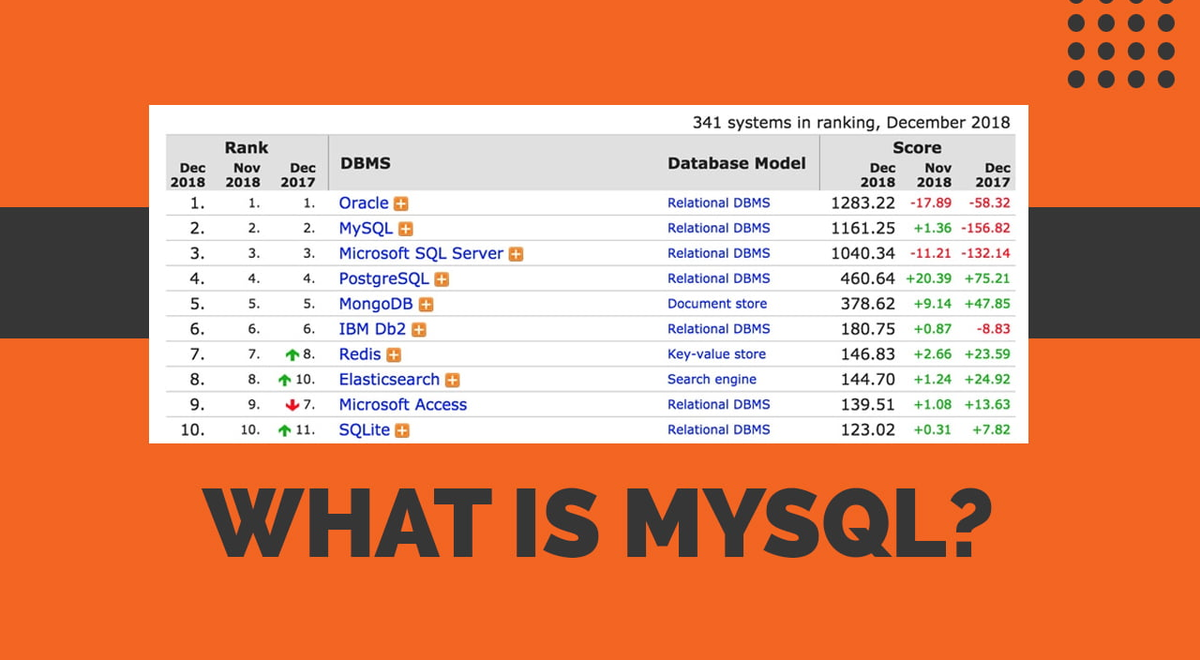
For years, “just use MySQL” was treated like database common sense—especially if you wanted to ship fast and avoid the complexity of “that other SQL.” But when PostgreSQL became the default choice for more developers than MySQL, it wasn’t a cosmetic change. It signaled a worldview shift: developers are increasingly selecting databases based on real capabilities, not convenience.
The quiet end of “whatever comes with hosting”⌗
The old logic behind MySQL’s dominance was simple: it’s everywhere. It ships with tons of hosting stacks, tutorials assume it, and most teams never had to ask whether they actually needed anything more.
But popularity isn’t the same thing as fit. MySQL became the default because it was easy to deploy, not because it was the strongest long-term foundation for modern application patterns. PostgreSQL’s rise reflects a more modern decision-making loop:
- You start with the problem (search, analytics, event logs, geospatial queries, background jobs).
- You evaluate database capabilities against that problem.
- You pick the database that reduces architectural contortions later.
In other words, teams are moving from “pick a database that’s convenient” to “pick a database that’s strategically correct.”
PostgreSQL’s real superpower: it adapts to your workload⌗
PostgreSQL isn’t “just a relational database,” and that’s the point. It can cover multiple roles in the same system, which means fewer bolt-on services, fewer synchronization problems, and fewer “write it twice” compromises.
Here are a few concrete ways teams actually use that flexibility:
Document-style data without abandoning SQL discipline⌗
PostgreSQL’s JSONB support lets you store semi-structured documents while retaining relational strengths like indexing and query capabilities. For example, you might store user preferences as JSON, but still enforce constraints elsewhere and join cleanly to normalized tables.
Practical takeaway: use JSONB for fields that change shape, not as a substitute for modeling when the domain is stable.
Time-series patterns without duct-taping⌗
If your app tracks events—prices, sensor readings, clicks—PostgreSQL can handle time-based queries efficiently with the right schema and indexes. In many teams, this avoids spinning up a separate time-series database just to run “show me the last 7 days” queries.
Practical takeaway: model time-series data with clear partitioning strategies (or at least indexes) early; don’t wait until dashboards are slow.
Geospatial and “location-aware” features that don’t feel hacked⌗
PostgreSQL is strong for geospatial data. If your product is map-driven—delivery zones, user proximity, route filtering—PostGIS-style workflows can keep those queries close to the data they depend on.
Practical takeaway: if your domain includes geography, treat it as a first-class requirement, not a later add-on.
Vector search without treating your database like a leaky cache⌗
Vector support in PostgreSQL enables embedding storage and similarity queries in the same transactional system as your relational data. That matters because your “what” (entities, permissions, metadata) often lives in relational tables, while your “how similar” lives in vectors. When the DB can do both, the application logic gets simpler and consistency gets better.
Practical takeaway: if your ranking depends on both vector similarity and relational constraints (e.g., “only show results the user is allowed to see”), co-locating vectors with relational data can reduce query gymnastics.
The underlying message is blunt: PostgreSQL gives developers fewer reasons to offload parts of the workload into special-purpose databases just because the original database couldn’t handle it cleanly.
The extensibility advantage: SQL that doesn’t cap your ambitions⌗
The phrase “extensibility” can sound like marketing fluff until you’ve lived through what happens when you hit a wall.
When a database is extensible, you can add capabilities without abandoning your existing schema, deployment model, and operational reality. PostgreSQL’s extension ecosystem—plus its ability to support advanced features natively—means teams can evolve without starting over.
A practical example: imagine you need to implement custom scoring for search results. With a database that supports server-side logic and rich indexing, you can push more work toward the data layer. You might end up with:
- SQL functions for deterministic scoring
- indexing strategies that make ranking queries fast enough
- consistent behavior across services because logic lives in the database
That reduces drift: no more “service A computes scoring a little differently than service B” because the logic isn’t replicated everywhere.
Developers choosing capability over default convenience⌗
This is the real implication behind “Postgres overtook MySQL”: the industry is learning to stop treating databases as plumbing.
Modern development pushes for tight feedback loops. You iterate quickly. Your schema changes frequently. Your product grows into new use cases. The cost of choosing a database that’s merely “good enough at day one” becomes a tax you pay every time you need to do something slightly unusual.
PostgreSQL, as a category, supports a wider range of patterns without requiring a new platform for each pattern. That affects more than architecture diagrams—it affects team velocity:
- fewer migrations between databases because one finally “can’t do it”
- fewer services to secure, monitor, and maintain
- fewer edge cases around consistency and replication
If you’ve ever spent weeks coordinating cross-service data correctness problems, you know why teams get enthusiastic about putting more capability inside the database that already owns the truth.
What this shift means for teams right now⌗
It’s easy to celebrate a “winner,” but what matters is the action you take next.
If you’re starting a new project⌗
Don’t pick PostgreSQL because it’s trending—pick it because its strengths match your roadmap. Ask questions like:
- Do you need semi-structured data with queryable fields?
- Are you likely to add search, geospatial, analytics, or vector retrieval?
- Do you want application logic to remain consistent when requirements change?
- Are you aiming to reduce the number of supporting data services?
If you can answer “yes” to even a couple, PostgreSQL is often the safer bet.
If you’re on MySQL today⌗
You’re not obligated to panic or rewrite everything. Instead, be tactical:
- Identify the first pain point that MySQL creates (query complexity, indexing limits, evolving data shape, performance under mixed workloads).
- Evaluate whether PostgreSQL would remove that pain in a way that reduces system complexity—not just “improves performance on one query.”
- Pilot migration for a bounded workload (one service, one dataset subset) and measure not only latency, but operational overhead and developer effort.
The best migrations are boring. They start with a real workload and a clear definition of “success.”
If you’re hiring and standardizing stacks⌗
Your database choice influences hiring patterns, onboarding time, and tooling. When PostgreSQL becomes the default, you benefit from a larger pool of developers who already know how to model data using constraints, indexes, and extensions—and who can troubleshoot issues without guessing.
Standardization also affects observability. You’ll want consistent metrics for query performance, lock contention, slow query logs, and index usage across environments. PostgreSQL’s ecosystem and tools make this easier—if you treat it as part of your engineering practice, not a one-time setup.
Conclusion: PostgreSQL isn’t just winning—it’s changing the decision model⌗
PostgreSQL overtaking MySQL isn’t merely a shift in ranking. It’s a signal that developers are selecting databases as strategic platforms, not as pre-installed conveniences. The implications are huge because the database you choose shapes how easily you can evolve your product—whether that evolution involves semi-structured data, geospatial queries, time-based analytics, or vector search.
The era of “just use MySQL because it’s easy” is over. The next era is about fit: picking the database that lets your application grow without making you rebuild your foundations every time your requirements get interesting.