The Rise of Local-First Software and Why It Matters
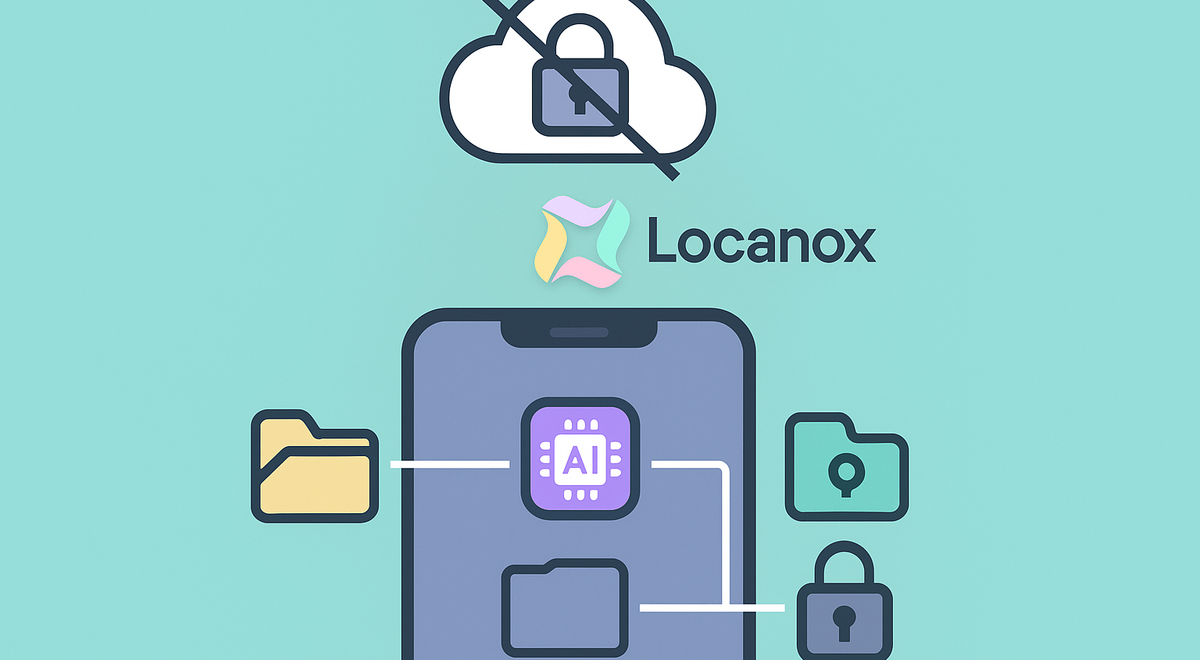
The best software doesn’t ask permission from the network. It just works—instantly, smoothly, and even when you’re offline. Local-first software flips the old model on its head: instead of treating the cloud as the source of truth and the client as a temporary viewer, it treats your device as the working system. The result is software that feels fast because it doesn’t wait, and resilient because it doesn’t break when the connection does.
What “local-first” actually means (and what it rejects)⌗
Local-first isn’t a marketing slogan; it’s a design stance. In a local-first app:
- The source of truth starts on your device. Reads and writes happen locally.
- The cloud is a sync destination, not a gatekeeper. It receives changes and distributes them to other devices.
- The app can operate without a network. You can create, edit, and reorganize data even if connectivity disappears.
- Conflicts are handled by design, not by user prompts. The system merges updates instead of forcing humans to arbitrate.
The rejected alternative is the classic client-server workflow: load from the server, edit, then save back—often with UI logic that turns into a “loading spinner” festival. Even if the network is usually fast, this model keeps injecting round trips into the user experience. Slow networks and flaky Wi‑Fi aren’t edge cases; they’re normal life.
Local-first removes the round trips from the critical path. When you type into a note app, the note appears immediately because it’s written locally. When you reconnect, synchronization happens in the background.
Why the old approach was “good enough” until it wasn’t⌗
For years, many teams treated “offline” as a special mode: store things locally, then reconcile later. That sounds close to local-first, but the practical difference is where correctness lives. In the old approach, the server often remains the authority. The client may cache, but it still depends on server truth.
That becomes painful in four common scenarios:
Concurrent edits across devices
Open the same document on your laptop and phone, edit both, and then watch the conflict resolution dance begin.Slow or unstable connections
If saves are required to render a “successful state,” the UI will stall. Users blame your app even when the problem is the Wi‑Fi.Real-time-ish features without real-time guarantees
Systems built around polling or ephemeral WebSocket state can degrade into “looks fine until it doesn’t.”Complex merge logic
The more structured the data, the harder conflict handling becomes. Teams either simplify the product or punt conflicts to the user.
Local-first doesn’t magically eliminate distributed systems complexity—but it puts the complexity where it belongs: inside the sync layer.
The sync problem: merges without drama⌗
If multiple devices can change the same data offline, you need a sync system that can merge changes deterministically. You can’t rely on “last writer wins” without corrupting user intent. And you can’t afford to ask users to resolve conflicts every time they lose connectivity for ten minutes.
This is the core role of CRDTs (Conflict-free Replicated Data Types). A CRDT is a data structure designed so that:
- Each device can apply updates locally.
- Updates can be exchanged in any order.
- Eventually, all replicas converge to the same state.
The important practical point is not the math—it’s the UX. With CRDTs, you get merge-by-default. Instead of detecting conflicts and escalating them, the system merges changes automatically in a way that preserves intent as much as the model allows.
A concrete example: collaborative notes⌗
Imagine a shared note with a checklist. On your laptop you tick item 3. On your phone you add a new item right below item 2—offline. When you reconnect:
- Your local edits are already present on each device.
- Sync exchanges the operations.
- The CRDT merges them into a single consistent checklist.
Users don’t need to guess which version is “correct,” and the app doesn’t need to block until reconciliation completes. The UI never has to wait for a network round trip to show a usable state.
CRDTs in practice: Automerge and Yjs as the “merge engines”⌗
CRDTs aren’t one monolithic thing. Different CRDT approaches exist, and different ecosystems optimize for different workloads. Two popular building blocks:
- Automerge: often used for structured document editing where you want a high-level “document that merges.” It’s a good fit when your app’s data model is rich and you want predictable merging behavior.
- Yjs: widely adopted for real-time collaborative editing patterns. It’s commonly paired with providers that handle transport (WebRTC, WebSocket, etc.) and persistence.
The practical takeaway: you don’t build a custom merge algorithm for every feature. You pick a proven CRDT library, model your data as CRDT-managed structures, and let the library handle convergence.
A developer-friendly mindset⌗
To make CRDTs work smoothly, structure your app so that:
- Local changes are first-class. Your UI writes to the CRDT state immediately.
- Sync is incremental and backgrounded. You send/receive updates continuously rather than doing full document overwrites.
- Persistence is explicit. Store the CRDT state (or its updates) locally so reopening the app doesn’t re-run “download to render” flows.
If your app architecture is already event-driven, CRDTs fit naturally: local events mutate local state, and sync propagates the same state transitions outward.
ElectricSQL and the “database that speaks CRDT” idea⌗
CRDTs are often presented as collaboration tools, but their real leverage appears when you treat them as a persistence layer rather than just an in-memory sync strategy. That’s where tools like ElectricSQL enter the conversation: they aim to make local-first development closer to normal database workflows.
Instead of thinking, “How do I synchronize this custom document format?” you think, “How do I keep my local database consistent with other replicas while still supporting offline work?”
The most valuable shift is psychological and architectural:
- You stop designing around the idea that the server must be reachable to do useful work.
- You design around local correctness first, then synchronization as a system behavior.
In practical terms, teams can build features that feel like standard database-backed apps—except the sync layer handles replication and conflict resolution without asking the UI to babysit the network.
What changes for UX, performance, and engineering teams⌗
Local-first isn’t only a technical change; it changes what your product can promise.
1) The end of “loading to edit”⌗
With local-first, “load” becomes “hydrate” and “render,” not “wait.” If your data is already on-device, the app can show content immediately. Sync catches up later.
That’s how you avoid the spinner loops users hate: “Fetching updates…”, “Syncing…”, “Reconnecting…”. The app remains interactive because the user is never blocked by remote state.
2) Offline becomes a feature, not a fallback⌗
Offline-first used to mean “read-only with occasional edits.” Local-first means offline edits are the default. If sync is robust, offline isn’t an exception path—it’s just another condition.
3) Engineering shifts from request/response to replication mindset⌗
You stop designing APIs around “submit changes, server validates, client displays.” Instead, you design around:
- local mutation
- durable local storage
- deterministic merge
- background replication
This also clarifies responsibilities: the sync engine owns distribution and convergence; the UI owns immediate feedback.
4) Testing becomes more realistic⌗
Network simulations matter, but local-first changes the test surface dramatically. You can test correctness by:
- applying updates independently on two replicas
- permuting update order
- verifying convergence after sync
That’s a cleaner mental model than trying to reproduce timing-dependent server-side race conditions.
The future isn’t faster networks—it’s fewer required networks⌗
It’s tempting to chase performance by upgrading infrastructure: lower latency CDNs, faster APIs, better caching. Those improvements help, but local-first attacks the root UX problem: network round trips shouldn’t be on the critical path for core operations.
When CRDT-based sync is done right, most user actions don’t depend on connectivity. The cloud becomes a distribution mechanism, not a dependency.
That’s why local-first is rising now. It’s not just because developers want offline mode—it’s because CRDTs and modern sync tooling have matured into practical, integrable building blocks. Libraries like Automerge and Yjs provide the merge semantics. Systems like ElectricSQL bring the “database-like” experience closer to what teams already understand.
The common outcome is straightforward: apps that start instantly, feel responsive under stress, and recover gracefully. Not because the network is magical—but because the app no longer needs the network to be “real.”
Conclusion: Build for local truth, then sync with confidence⌗
Local-first software is a bet on a simple idea: your device should be able to do real work without waiting. CRDTs make the hard part—conflicting updates—tractable by ensuring convergence without user drama. With proven tools and sync engines, teams can finally deliver the experience users expect: edits that appear instantly, offline reliability, and background sync that doesn’t interrupt the flow. The next wave of software won’t just be faster—it will be less dependent on the connection entirely.