The Unreasonable Effectiveness of SQLite
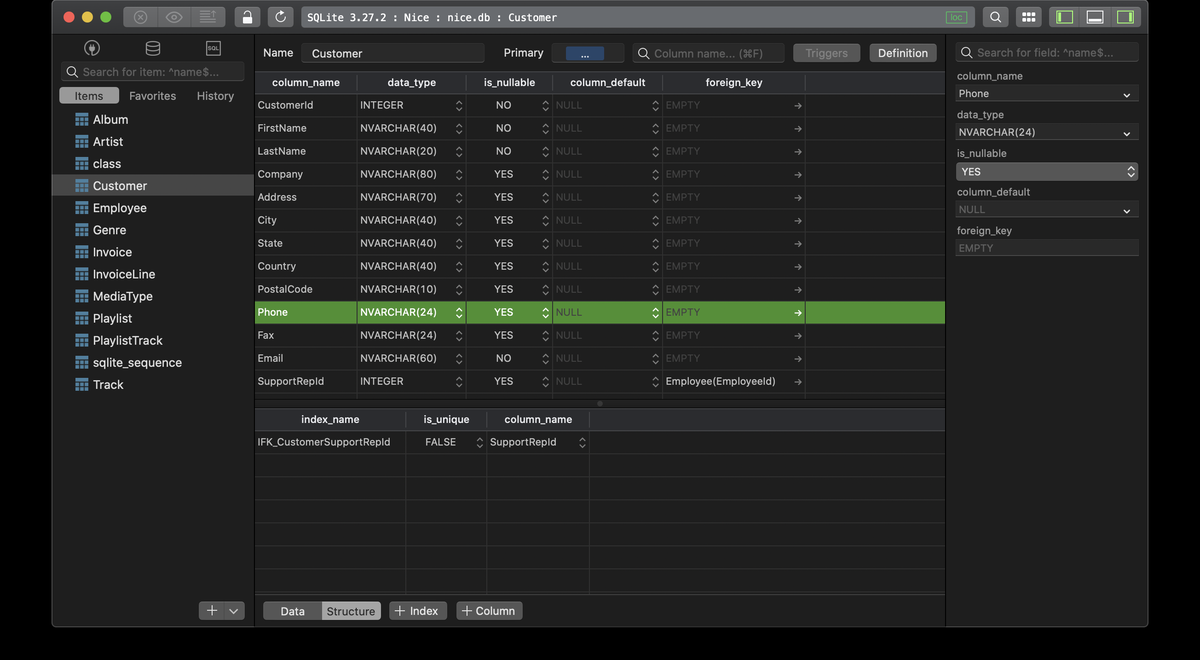
SQLite doesn’t feel like it should be this good. It’s small, it’s file-based, and it doesn’t come with a deployment ceremony worthy of enterprise budgets. And yet—quietly, everywhere—it runs the stuff that actually matters: phones, browsers, embedded controllers, and the offline-first apps people rely on. The punchline is simple: a lot of backend developers dismiss SQLite as a “toy,” and that dismissal is mostly nostalgia for client-server complexity.
SQLite is everywhere—and not by accident⌗
“Toy” is the wrong word for software that shows up by default across platforms you didn’t choose. SQLite is built into iOS and Android through common libraries, ships inside countless apps, and powers embedded systems where running a separate database server would be an operational joke. Even in more “modern” stacks, SQLite keeps showing up in the cracks: caches, local state, background sync buffers, and analytics scratchpads.
Here’s the deeper reason: SQLite collapses the classic database deployment surface area into something you can reason about. Instead of “database server + network + authentication + migrations tooling + connection pooling + ops,” you get:
- a single file (or a set of files),
- a small set of modes and pragmas,
- and a predictable lifecycle: create DB → write transactions → read results.
That predictability matters when the product is small, the team is lean, and the cost of being wrong is measured in developer hours, not cloud bills.
WAL mode: the concurrency story backend devs usually miss⌗
The most common reason developers underestimate SQLite is that they remember old performance myths or default settings they never touched. SQLite has a concurrency mode that changes the entire conversation: WAL (Write-Ahead Logging).
In WAL mode, SQLite separates reads from writes in a way that’s especially friendly to typical app workloads: many concurrent readers, one writer at a time (or at least “not a writer stampede”). Practically, this means:
- Readers don’t block behind writers nearly as often.
- You get better performance under mixed read/write traffic.
- Long read transactions are safer because they work against a consistent snapshot.
If you’ve ever built an app where the database is “mostly reads” (e.g., serving API responses, resolving user sessions, fetching cached entities), WAL is exactly what you want.
A concrete example: imagine a service that stores user profiles and feature flags. Writes happen when users update settings; reads happen constantly when requests come in. With SQLite in WAL mode, that pattern maps cleanly:
- One writer transaction applies updates.
- Many readers fetch profile data concurrently.
- Clients don’t wait on the writer except when they truly must.
To enable it, you’ll typically set the database pragma once in your app startup:
PRAGMA journal_mode = WAL;
If you’re using a library (ORMs or drivers), confirm it doesn’t override this—and ensure your connection strategy doesn’t fight SQLite with overly aggressive connection churn.
Replication without heroics: Litestream and the real “serverless database” story⌗
If your mental model is “SQLite means no reliability,” you’re thinking about local files as disposable. That’s the wrong framing. You don’t need to abandon SQLite; you need a replication layer that matches its strengths.
Enter Litestream: an approach to replicate SQLite databases continuously so you can treat a local SQLite file as a durable, recoverable data source. The win is that you keep the operational simplicity of SQLite while gaining the safety net you expect from a server-based database.
The practical pattern looks like this:
- Your app writes to the local SQLite database (fast, simple, no network round trips).
- Litestream continuously ships changes to a remote storage target.
- In a failure scenario, you restore from the replicated stream.
This is particularly compelling for systems where you already like the “single writer” or “local-first” design. For example:
- A mobile app that syncs to a backend: store locally, replicate server-side from the device or from a companion process.
- A web service that prioritizes low latency: write locally to SQLite (on the same host), replicate for durability.
- Edge deployments: run a local DB where network jitter exists, replicate changes upstream.
The important point isn’t that SQLite can be replicated; it’s that the replication story can be practical. You’re not asking SQLite to behave like a distributed database. You’re using it the way it’s meant to be used: transactional engine with a clean replication pipeline.
When SQLite beats PostgreSQL (and why “at a fraction of the cost” is believable)⌗
Let’s kill a recurring misconception: SQLite is not “always slower than PostgreSQL.” It’s different. And for a surprising number of real workloads—especially read-heavy workloads with a single-writer pattern—SQLite can outperform PostgreSQL while requiring far less operational overhead.
Why?
- Fewer moving parts: no client-server protocol overhead for every request.
- Local I/O: reads and writes happen on the same machine (or at least close to it).
- Lightweight connections: you don’t fight pool configuration or connection storms.
- Simpler deployment: no “database is down” because of networking, auth misconfigurations, or cluster topology issues.
Suppose you’re building a backend for a small SaaS: think dashboards, content delivery, and API endpoints. Writes might happen through background jobs, scheduled syncs, or user actions that are relatively infrequent compared to read traffic. In that scenario, PostgreSQL’s strength—high-concurrency multi-writer workloads and distributed operational features—may be overkill.
SQLite shines when the bottleneck is not “global write throughput under contention,” but “how quickly can we serve requests with clean transactional semantics.”
A rule of thumb I’ve adopted: if your system design doesn’t require the database to coordinate dozens of concurrent writers across many networked instances, start with SQLite. If you later discover a write contention issue, you can revisit the architecture. But you’ll have learned something valuable before you pay the operational tax.
Practical guidance: how to use SQLite like you mean it⌗
If you’re going to take SQLite seriously, treat it like production software, not a demo.
Use WAL mode and plan for cleanup⌗
WAL mode changes the concurrency profile in your favor, but it comes with operational considerations (like checkpointing behavior). Don’t ignore it. Make sure your application or maintenance process runs appropriate checkpointing so WAL files don’t grow without bound.
Design for the single-writer reality⌗
Many systems naturally fit SQLite’s sweet spot: one writer transaction stream, lots of readers. If your design spawns multiple writers aggressively, you’ll feel it. Instead:
- Batch writes when possible.
- Route all writes through a single queue/worker.
- Keep write transactions small and fast.
Pick the right locking assumptions⌗
SQLite locks at the database file level. That means your app should avoid patterns that cause unnecessary writes during request handling. A common anti-pattern is “log to the DB synchronously on every request.” If you want traceability, queue the logs and persist them in a background batch.
Tune your connection strategy⌗
SQLite supports concurrency, but the way you manage connections still matters. Prefer long-lived connections when the runtime is stable, and be careful with high-frequency connect/disconnect loops.
Validate with the workload you actually have⌗
Before declaring victory or failure, load test your real query mix. SQLite performance is sensitive to schema design, indexes, and transaction sizing. If your queries are unindexed or your transactions are chunky, you’ll hurt any database—but SQLite tends to reveal these issues sooner because the system is so direct.
The “no database server” mindset that unlocks shipping⌗
The most compelling benefit of SQLite isn’t raw performance—it’s the ability to ship. Backend projects stall for predictable reasons: database migration pipelines break, production connection settings drift, replication lags, and someone inevitably asks why the cluster is misbehaving “only in staging.”
With SQLite, you remove an entire class of problems. Your database becomes an artifact of your application, not a separately administered service you have to babysit.
And that doesn’t mean you can’t be serious about durability. Replication tools like Litestream let you keep the simplicity while moving from “local file” to “recoverable system.” WAL mode gives you concurrency that fits real-world read patterns. At that point, the “toy database” label starts to look like a bias, not a technical assessment.
If you’re building your next side project, start here. If you’re building your next startup, seriously consider it. Most teams don’t need more infrastructure—they need fewer failure modes and faster iteration loops.
Conclusion: SQLite earns its place, not your nostalgia⌗
SQLite is effective in the unreasonable way: it’s small, boring-looking, and operationally elegant, yet it handles real workloads across phones, browsers, and embedded devices. With WAL mode for concurrency, and replication options like Litestream for durability, it becomes a practical backbone for read-heavy systems with manageable write patterns. Treat it as a first-class backend datastore—not a toy—and you may find you can build faster, deploy safer, and spend less time fighting infrastructure.